
It is just a plain simple fact...all things being equal, a lighter race car will go faster. In fact, a minimum weight specification is standard in just about any set of rules for racing. My class (P1) has multiple weight limits depending on the car and engine combination. My minimum weight limit is 1,350 lbs. including me and my gear at the end of a race...and we are no where near it yet. We usually are at least 100 lbs. over the minimum so we constantly search for ways to get this weight penalty down.
My Norma was engineered for a series that runs in Europe at a heavier weight so it's really a safe durable car but getting that extra weight back out is tough. We've done most of the easy things like changing to a lithium battery and now we have to get more creative.
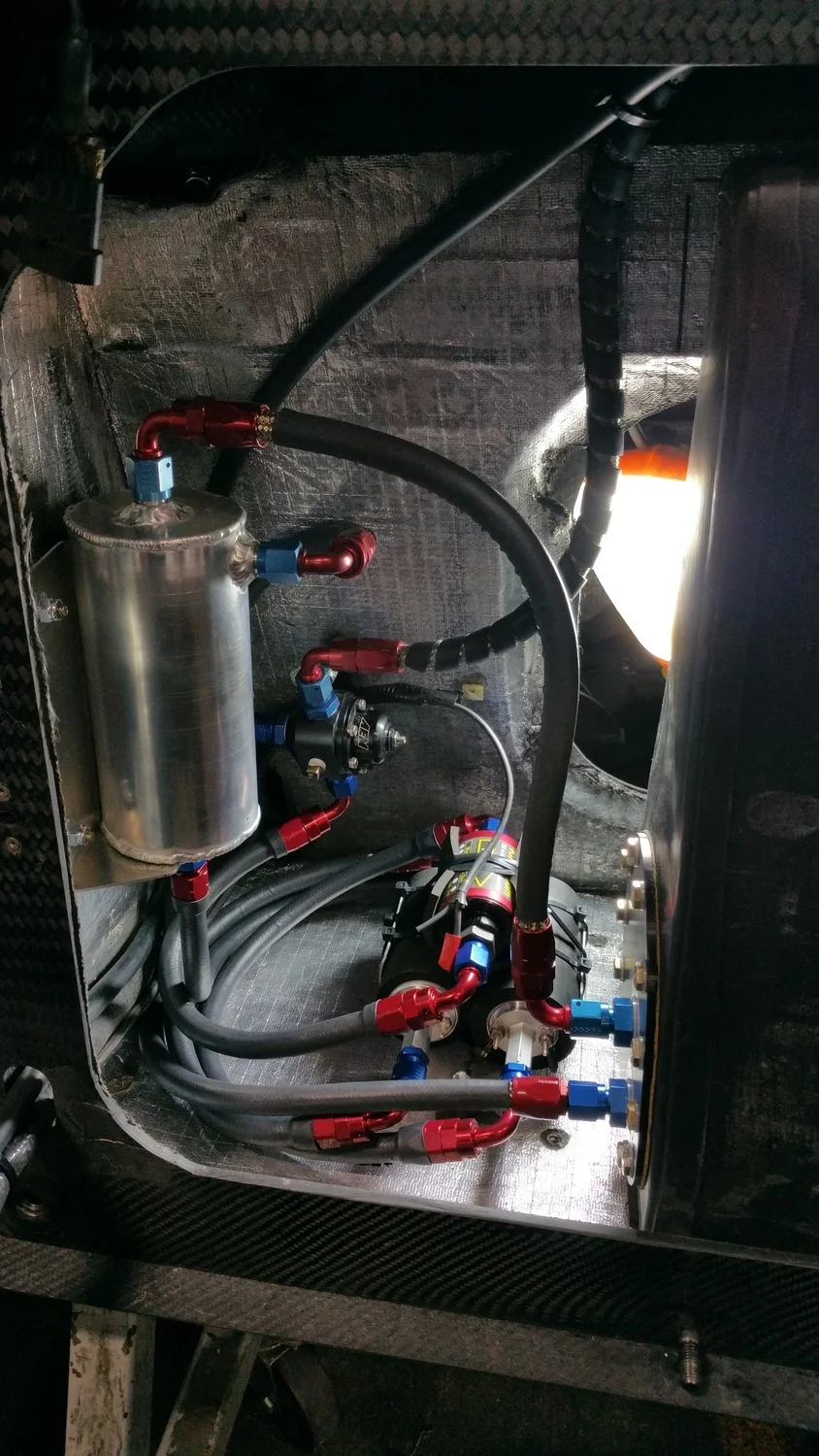
We've found that with the g-forces the car generates in the corners, we get fuel starvation once we fall below 3 gallons of fuel on-board so to maintain that cushion means 18.3 extra pounds to lug around. Jason has rigged up a new system with a swirl pot so we can take that extra load down as low as we dare.
I'm big for a race car driver at 6'3" so I'm always trying to watch my weight. I'm around 195 lbs. so not much more to get out of me. However, my race gear weighed about 12 lbs. (helmet, fire suit, shoes, gloves, fire proof underwear, Hans device, arm restraints, etc.). Amazingly, you can save some weight in the gear now due to modern technology and cutting edge fibers. I saved 1.5 lbs. by upgrading my underwear and shoes. A new fire suit can save another 1.5 lbs., so saving my pennies for that.
The big project looming ahead and one that should save the most weight is to convert the rest of our lightweight fiberglass bodywork to the lightest possible carbon fiber pieces.